Toast Inc.: Bread For This

With the COVID-19 pandemic sweeping the nation and causing economic downturn, companies across the country are struggling to stay afloat. In most states, any non-essential businesses are unable to open their doors at all, leading to massive lay-offs and for unemployment rates to soar, as 36.5 million Americans have now filed for unemployment since March. Of course, as unfortunate as it is, the closing of these businesses has been a necessary precaution in order to save human lives. That being said, it is sometimes hard to humanize those unemployment numbers and hard to imagine what smaller businesses are going through, especially when we are more isolated than ever. 

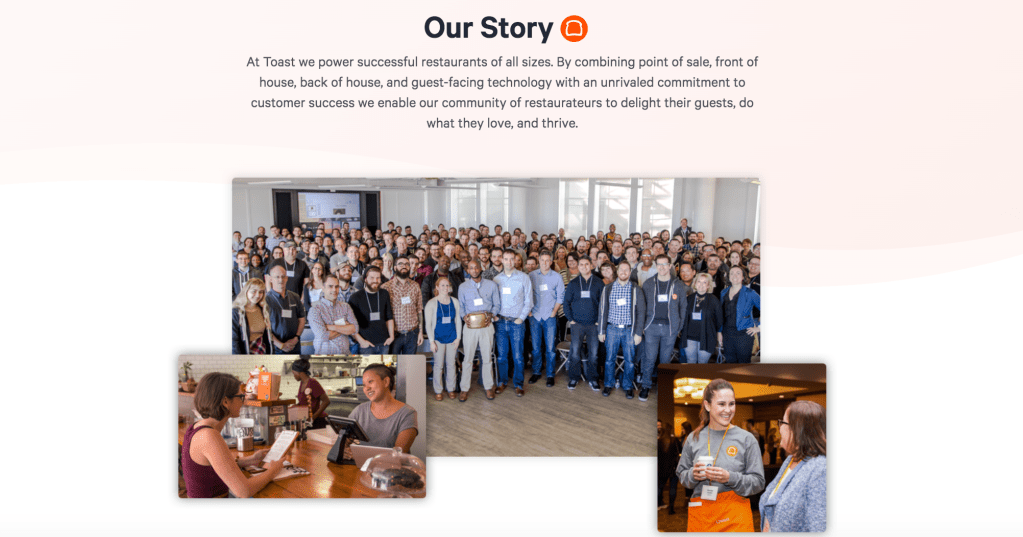
One particular business has a story that is definitely worth telling. Toast Incorporated, a smaller software company whose headquarters is located in Boston, Massachusetts, is one of many companies hit hard by the current climate. Toast sells “point of sale” systems to restaurants, which in layman’s terms, are the touch screen machines that a cashier uses to take your order and complete your payment. The company was launched in 2013, and now has five locations and a total of about 2,000 employees. 

Toast’s top clientele are restaurants, and with restaurants across the country currently struggling, the company had to lay off 50% of all their employees in April to prevent going under. While it’s widely understood that restaurants across the nation are fighting to stay above water, a company like Toast gets lost in the shuffle of people’s empathy, as the company operates with business to business sales method, which means it is not a company where consumers interact directly (at least in terms of consumption). Like so many businesses, Toast is a quiet casualty of COVID-19, and it is truly an example of how far reaching the pandemic is. The company also had to rescind any offers they had to employees who were set to start any time after April, meaning any college students who were set to work there after graduation lost their jobs before they ever got to work a day. 
One of those college students who lost their spot at Toast before ever clocking in was Bryant University Senior Marissa Mealey. Marissa was hired by Toast all the way back in October as an internal sales associate. Toast informed Mealey that they had to take their offer back in April, meaning she had lost five months of her senior year when she could have been looking for another job. Toast was cordial and apologetic when giving Mealey the news, and informed her that once they righted the ship, she would be on their short list. While she could have been bitter or angry– and no one would have blamed her– Mealey had a completely different reaction: one of high resolve and understanding. “It was obviously disappointing because I really wanted to work there, but I completely understood that it was what had to happen,” said Mealey. “This whole thing is bigger than me, and crying ‘woe is me’ would be selfish.”

Toast was so impressed with Mealey’s handling of the situation, that even though they are struggling, they took time to reach out to Bryant University to sing her praises, and even though they hope they can eventually re-offer Mealey her position, they urged Bryant to do all they could do get her a job. “That was definitely a really nice gesture by Toast,” said Mealey. “It meant a lot to me that they would do something like that, especially in these chaotic times. It says a lot about the company. A lot of employees who got laid off that I have spoken with are more sad that they will not be working at Toast than they are that they lost their jobs and I think that is rare.”

On LinkedIn, current and ex-employees of toast rallied around each other and tried to help anyway they could. Under almost every post one made about no longer working at Toast, there were about a dozen comments by colleagues recommending different Sales Development Representative roles. 

Much like their almost employee Marissa Mealey, Toast is not letting unfortunate circumstances get the best of them. When the pandemic first started leading to businesses closing, Toast was on the front lines advocating for the CARES act. The CARES Act– which stands for the Coronavirus Aid, Relief and Economic Security Act– is a two trillion dollar economic relief package signed into law on March 27th. The Act helps unemployed workers and small businesses impacted by Coronavirus, and Toast lobbied heavily for this act, as it would help employees they had to lay off, restaurants and Toast itself. 

Toast has also started trying to get involved in their community and trying to rally around local restaurants. Toast started the Rally for Restaurants Challenge, where they encourage people to purchase gift cards to local restaurants in order to win prizes. 

In addition, Toast has been proactive in developing products that benefit the company and restaurants in these trying times. In April, they developed “Toast Delivery Services” which is a “flat rate delivery platform, built exclusively to benefit restaurants.” The service eliminates high third party fees, by giving all restaurants a flat rate when hiring delivery drivers and other expenses that come with the process of transitioning businesses to rely almost entirely on delivery for revenue. The service has helped local restaurants stay open, and has helped Toast start earning again.

While Toast’s struggle and hardship is not unique, their handling of these dark times has been inspiring. Even though they have fallen on hard times and had to part ways with so many members of the company, they have not stopped advocating for their people and for their clients, whether it be through initiatives or by going out of their way to uplift an ex-employee. So many people and businesses have fallen on hard times in the last few months, and while Toast was hit hard, they are trying to hit back. Their story is encouraging, and is probably one of millions of uplifting stories from this pandemic that most people will never hear.

James Taylor Tells Riveting Stories about his life on Rick Rubin’s Podcast

While not a story-telling podcast in the traditional sense, music producer Rick Rubin’s podcast “Broken Records with Rick Rubin,” often works like an audio documentary, detailing origin stories and career trajectories through discussion with musicians. According to the Broken Records website, the podcast is designed to work in the way liner notes on an album do, which depending on the artist can read like stories in their own right, explaining the nature of the show. The hosts of the podcast are Rick Rubin (legendary producer who started the music label Def Jam), Malcom Gladwell (famous author and journalist) and Bruce Headlam (journalist and the guy from the NY Times documentary “Page One” we watched in class).

One episode that really stands out for it’s storytelling is episode 36, titled “James Taylor Comes Clean.” In this episode, Malcom Gladwell talks to James Taylor about his music journey, and Taylor tells stories about his origin, his struggles with addiction, tragedy and his incredible luck. The podcast is supposed to help promote Taylor’s new audio book “Breakshot,” which further explains why this podcast is so rich in storytelling, as Taylor is trying to generate interest for the stories in the audio book. 

At the beginning of the podcast, Taylor details how his family has always been a little bit cursed ever since his grandmother died from complications giving birth to his father. His great-grandfather (his grandfather’s father) had helped deliver the baby, and killed himself two months later due to grief. His grandfather became an alcoholic after this tragedy, and it started a chain of addiction in his family. His father was an alcoholic, and despite being a highly functioning one (he was a doctor at Mass General in Boston) it drove James’s parents to divorce.  James was one of five children, and three of the Taylor children (including James himself) dealt with mental illness and addiction and were institutionalized at one point or another at McLean Hospital. Gladwell and Taylor talk about how the birth complication was like the “original sin” of the Taylors.

Taylor also talks about his beginning days in music. He tells stories about how him and his brother used to make “beach music,” and even got signed out of high school, but the label never really let them record anything. He goes on to discuss how he moved to New York and regularly performed at a place called the Owl Cafe where they fed him and housed him as a broke, young musician. It was during this time that Taylor got addicted to heroin. His father called him and asked him how he was doing and Taylor confessed he had gotten into drugs, and his father drove all the way to New York to pick him up. 

Taylor continues the story by talking about how just a little while after he left New York, a friend of a friend of Taylor’s started working at Apple records, the music label the Beatles started (something Taylor cannot emphasize enough is a stroke of complete luck). That individual needed people to bring into the company so Taylor asked if he could get an audition. Taylor flew out to England and as just a twenty-something year old, he performed for George Harrison and Paul McCartney. He sang one song, “Something in the Way She Moves” (which Taylor said likely influenced the Beatles song “Something” that came out a year later) and the Beatles said they were alright if he was signed. So he was. 

Taylor goes on to tell stories about his song-writing, and his relationships particularly with Beatle John Lennon. He discusses how he lived right by Lennon in New York, how he ran into John David Chapman (Lennon’s assassin) just days before Lennon’s murder, and how he could here the gunshots that killed Lennon from his apartment window. Taylor tells many never before heard anecdotes and stories on the podcast, ultimately saying how his life has been charmed and any bad things in his life have been more or less self-inflicted. 

The podcast is unique in many ways. For starters, throughout Taylor’s stories, Taylor would periodically stop to play a song that was influenced by a certain thing happening in the story. Also, while on paper it might seem that it was set up like a typical discussion podcast, Gladwell didn’t speak much. He steered Taylor here and there but mostly just let Taylor tell stories, and –unsurprisingly to anyone who has ever heard a James Taylor song– Taylor is a great story teller. Overall, I thoroughly enjoyed this podcast. I felt it worked on every level, and truly wouldn’t change anything. While the story could have been told in video format, I think the fact that it was told in a audio journalism format was best. Taylor’s voice (both talking and singing) is so compelling, and the story telling was so rich that anything more than hearing his voice would have taken away from what he was saying.

Understanding Our Common Enemy: COVID-19

Stop me if you’ve heard this before: these are unprecedented times we’re currently living in.

With COVID-19 (CoronaVirus) reeking havoc throughout the world, citizens are in positions that they have never been in before. People everywhere are in a state of confusion, floating through a dayless purgatory with no end in sight. Experiences throughout this pandemic are unique, but our uncertainty is not. No one knows what the future holds, the present is moving in slow motion, and the past feels like a dream. 

In fewer words: things are really weird right now. 

The best thing to do in this situation is to understand what’s happening in your community so you can help end the spread of this virus. Control what you can control to help the greater good. I think the hardest part about this whole thing is getting people to understand what is at stake even though they don’t personally feel at risk. That’s why it’s important to get educated, so we can understand that this isn’t someone else’s fight. This fight is all of ours, and we need to get familiar with it. 

What’s Happening?

For me personally, I live in Massachusetts, just twenty minutes from Boston in a county greatly afflicted by the virus. According to the Massachusetts Department of Health, as of April 7th, Norfolk County– where I live– has 1,592 confirmed cases of the virus. Only three counties in Massachusetts have more cases and in total the state has 15,202 cases. According to NPR, that number makes Massachusetts 6th in terms of states with the most cases, trailing five states with larger populations (with the exception of Louisiana). The MDH reports that 356 people have died from the disease in Massachusetts. When it comes to getting tested there’s a couple steps people have to take. For starters, if you have symptoms, it’s best to stay home. Since no vaccine exists, if you are showing symptoms and think you can recover on your own, do so and stay in your home. If you feel you need medical assistance, call your primary care physician who will administer a screening on the phone (unless you are experiencing severe symptoms then call 911). If your physician says that you need a test, call ahead and tell your local hospital (for me it would be any major hospital in Boston) you are coming. Many have tents set up to tend to COVID patients away from other patients. There you will be tended to and administered an official test.

What Are the Rules? 

As of March 31st in Massachusetts, there are no official “shelter-in place” orders but there are restrictions. All non-essential businesses are closed and no more than ten people can gather. Essential business include: gas stations, grocery stores, pharmacies, liquor stores, dispensaries, drive-thru, waste management and others. When it comes to outdoor recreation, going outside and exercising is allowed, as long as people are trying to maintain a six foot (social) distance. Going for runs or walks is okay, put parks are closed and staying at home is encouraged above all else. Public Schools in Massachusetts have not been cancelled for the rest of the year but they are closed. Currently they are set to re-open May 4th, but that feels like a cancellation is inevitable. All colleges in the area are closed.

Talking With People Who Know A Lot More Than Me:

Living in Massachusetts gives me the luxury of knowing quite a few medical professionals, as Boston Hospitals are considered by many to be the standard for healthcare in this country, thus making Boston an attractive place to live for those in the field. I talked to two nurses that I know about the virus, one of which actually tested positive for the virus and couldn’t go to work for two weeks because of it. 

Here’s what they had to say:

Demitra who works in the MICU (Medical Intensive Care Unit) at MGH (Mass General Hospital):

“The amount of education we have gotten over the past few days to weeks is overwhelming. But knowing how much this information matters for your own protection makes it work. We have to buddy up to make sure we are applying the PPE (Personal Protective Equipment) correctly, and not wasting a single item.”

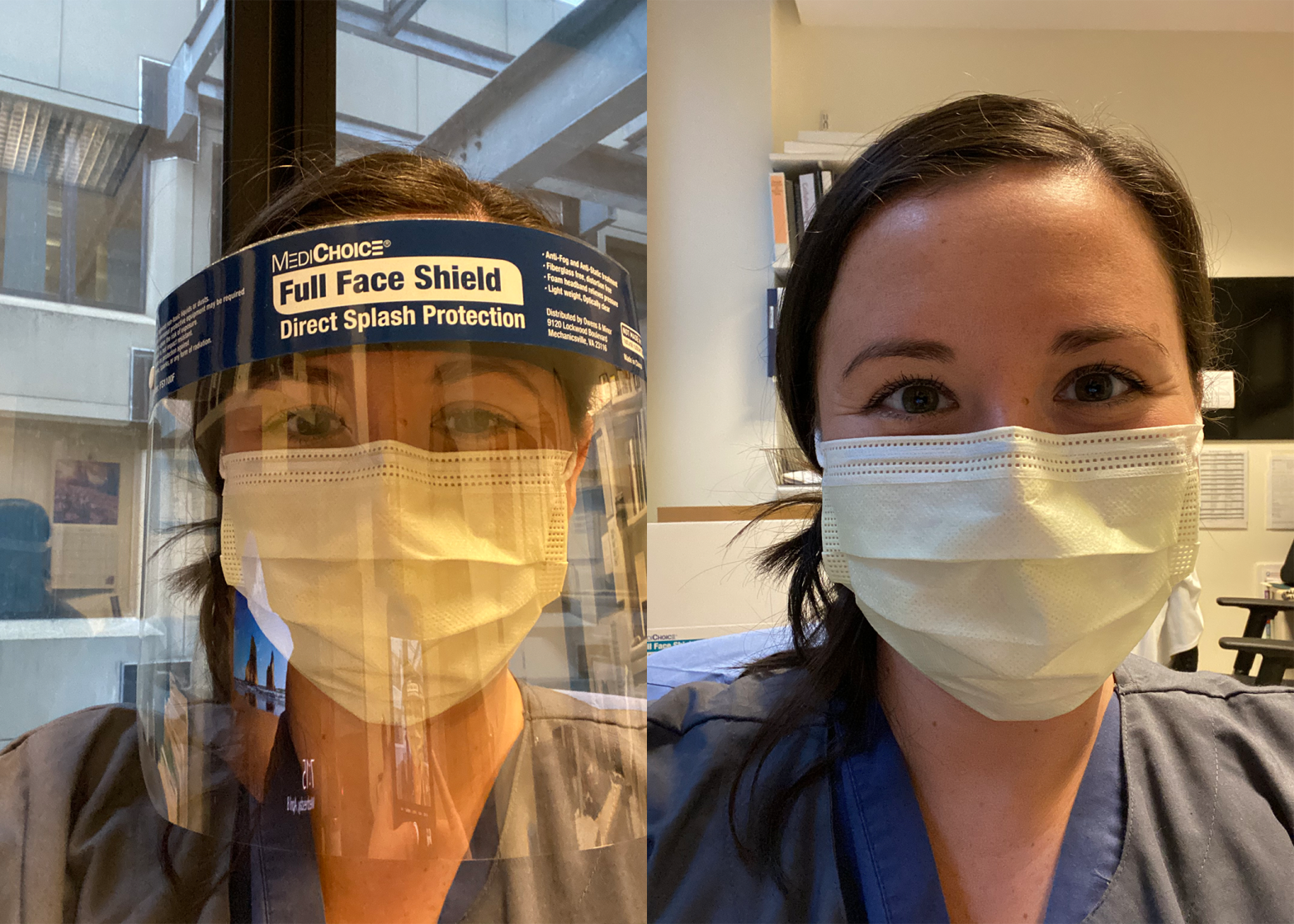
Christina (pictured above wearing protective masks) who is a Head RN at Mass Eye & Ear (Had the Virus):

“When I had to tell my staff I was being tested they panicked both for concern for me as well as concern for the exposure that they may have had from me. When I had to tell them I was positive it only heightened the anxiety. When I came back to work this week the feeling across the whole hospital was extremely tense, from walking in the door and having to immediately put a mask on and sign in to preparing the inpatient floors for the surge that is coming in the next few days.  The lack of family for patients is upsetting and keeping their spirits up as well as our own is already a strain.”

Final Notes

It’s clear from my conversations with these two nurses that health care professionals are currently over-worked, tired, overwhelmed and above all, showing bravery behind comprehension. I think the most heart-wrenching part about those two statements is the part Christina said about trying to keep patients’ spirits up when they can’t have family visitors. People are dying, and they can’t see those who they love most because they might infect them, and nurses and doctors have to handle (sometimes enforce) those situations. Isolation is hard, loss is harder, and dealing with loss in isolation is hell. 

Another noteworthy part from these statements is when Demitra said how much new information they are getting and how it is overwhelming. That’s something, perhaps naively, I hadn’t really considered. Doctors and Nurses have never dealt with something like this, so they are learning how to deal with it and with more information coming everyday things are constantly changing. 

For the sake of nurses like Christina and Demitra, for the sake of yourself, for the sake of everyone you love, stay inside. The sooner we commit to staying inside, the sooner this whole thing can end. Medical professionals are all of our heroes right now, but if you want to be their hero, stay inside. Listen to the news. Get educated. Educate your friends. Flatten the curve. 

And for the love of God, wash your hands.  

Sources:

https://www.npr.org/sections/health-shots/2020/03/16/816707182/map-tracking-the-spread-of-the-coronavirus-in-the-u-s

https://www.mass.gov/doc/covid-19-cases-in-massachusetts-as-of-april-7-2020/download

https://www.bostonmagazine.com/news/coronavirus-testing-boston/

https://www.bostonglobe.com/2020/04/05/metro/other-states-are-doing-it-should-massachusetts-schools-close-rest-year/

A Look Inside Local Government: Poughkeepsie’s Zoning Board Meets

In the United States, what truly turns the wheels of democracy is local government. In all it’s boring, stuffy, and sometimes archaic glory, local government is truly the best example of our fore-father’s vision at work: local elected representatives utilizing checks and balances to institute change within their towns. 

Even a small zoning board meeting in Poughkeepsie, New York– like the one they held at 6 PM on Monday, March 9th– is a great example of democracy in motion. The meeting, while focusing on problems specific to the Dutchess County town, is filled with scenes that resemble those from town meetings all across the nation. 

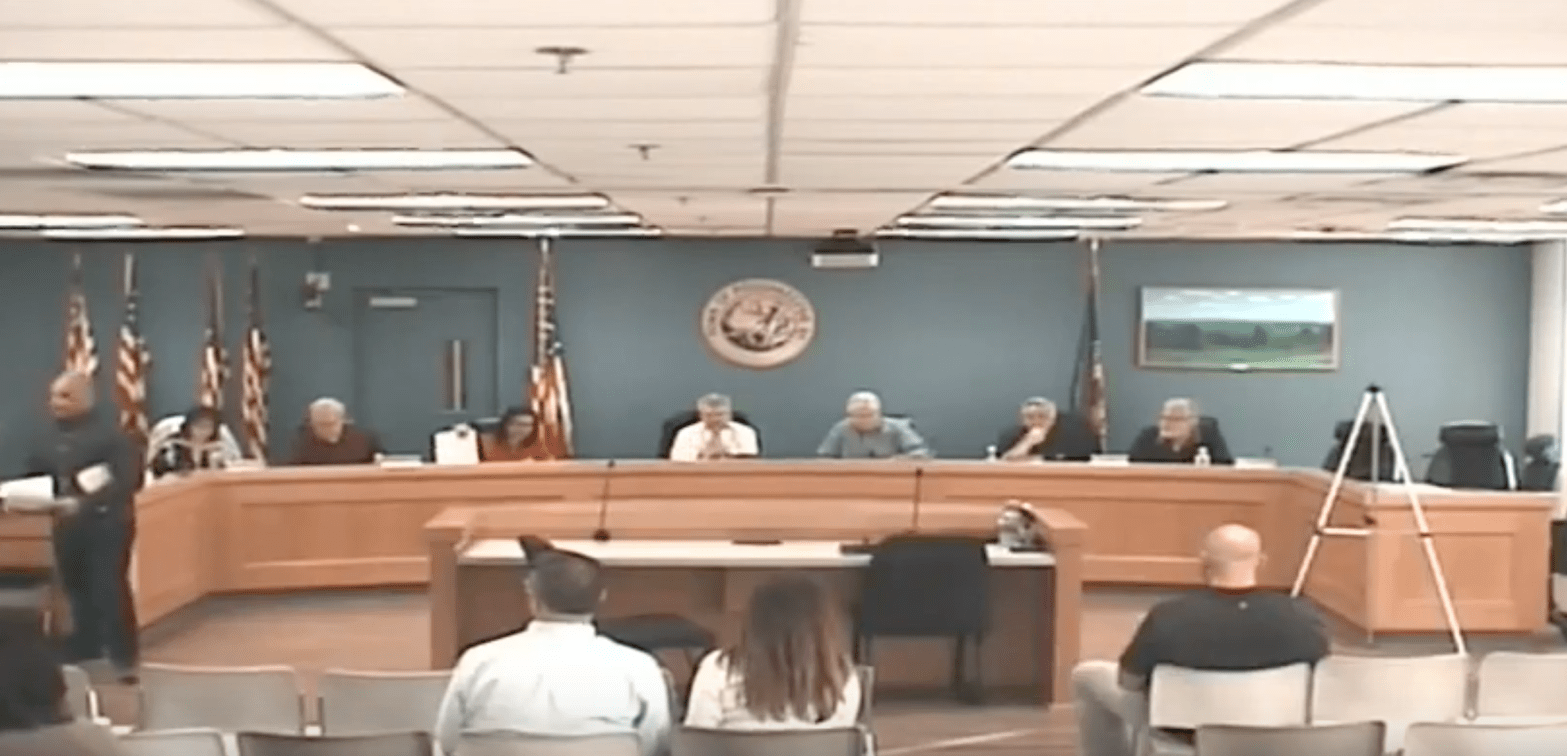
The room in which the town of Poughkeepsie’s hosts it’s Town Hall meetings looks a lot like how one would expect it to. The room has pale blue walls equipped with a yellow town crest– which features a Native American man– placed above the board’s bench, next to a slightly off-kilter watercolor painting of a scene from nature found in the town. The room is littered with six standing American flags, no one in the room is likely younger than forty-five, a majority of the chairs are empty, and the lighting is entirely too bright. This is local government, folks. Breathe it in.  

The meeting focused strictly on zoning appeals taking place around town in homes and businesses. The meeting– which started with the pledge of allegiance– was run by the chairman, Paul Lahey. Eight other members sat at the bench with him, and together they fielded nine different cases over the course of a meeting that lasted just under an hour and half.

According to the State of New York, The Zoning Board’s job is to “interpret the zoning ordinance or local law and to grant variances,” which in layman’s terms means that they are in charge of divvying up properties and dealing with all other matters relating to property regulations. 

“Let’s say something is set back 10 feet, but the structure proposed sits 2 feet from the side property line, the applicant has to appear before the Zoning Board of Appeals to seek a variance of 8 feet if 10 feet is required,” said Poughkeepsie’s Zoning Board Secretary, Sonia James. “The application first goes to the Zoning Administrator and if they deny it, then the applicant has to go to the ZBA to convince the board that this variance is actually required due to various reasons.”

This particular meeting started by going over “old business,” which is anything from previous meetings they had yet to come to a verdict on. The first case involved Vassar College, which the board immediately tabled to the next ZBA meeting on April 13th. 

Ah, democracy. 

One case that was particularly noteworthy was Kathleen and Kathleen Sense plea (no, that’s not a typo, they are both named really named Kathleen Sense) where they asked to build a eight to ten foot fence in a yard where they weren’t allowed to build a fence higher than three and a half feet. The Zoning Board seemed to think this request was ridiculous, and the Senses seemed to know that the board would never go for it. Perhaps that’s why when the Zoning Board suggested that instead of the fence, that the Sense’s install some landscaping, the Senses almost immediately decided that was a good idea, and they withdrew their variance request, smiling as they left the stand. 

Just like the Vassar College case that kicked the meeting off, a good amount of other cases got tabled to the next meeting. Considering these cases that were tabled were discussed during the “old business” part of the meeting, it shows that often these appeals can take months. 

“The most common issues that the Zoning Board of Appeals deals with is things getting set back,” said Sonia James. If this meeting is any indicator, that’s putting it lightly.

The meeting continued, moving from “old business” to “new business,” where four different cases were heard. One man asked for approval to legalize two existing sheds, another man asked to legalize an existing deck and two different men asked for approval to build and expand their garages. None of these cases were given a verdict as the appeals were just heard and the verdict will be given at the next meeting, unless of course it’s tabled. 

For each “new business” case, those requesting their appeal had to plead their case for why they deserved to be granted variance. The board would ask questions where they saw fit, and when the board decides they have enough information to make a decision, they dismiss the person. The whole thing is a little mundane and may seem excessive, but it is truly quite important when it comes to fairness, civility, property rights and town sustainability. 

Despite the importance of local government, few people understand how all the aspects of their residential politics work or what it looks like. Fortunately, for those who want to know more about it, there are plenty of easy ways to get informed. Generally, all meetings held are broadcasted on either local cable access channels or on the internet, and even though every meeting looks like it was taken off of a VHS tape from 2002, it’s a good way to keep up to date with what’s happening in your town. In addition, local government officials typically are very willing to teach people about what it is they do, and Poughkeepsie New York’s local officials are no different. 

“Common citizens are not usually aware of zoning rules,” said Sonia James. “That’s why we have a zoning department; all applications, plans have to get approval from [Lissett Tucker] the Zoning Administrator.”

At the end of the day, it’s a relatively thankless job that those on the Zoning Board do. Even though they hold public office, it’s not likely most citizens know who they are unless they have gone in front of the board, and if they have, there’s a chance they aren’t fond of those officials if their appeals or requests were denied. So while the Zoning Board board isn’t glamorous, and might not come with much praise, it is nevertheless a key cog in the democratic system, and helps to ensure town prosperity, and it should be celebrated.

Marist Poll: February Approval Ratings

On February 19th, The Marist Poll released the results of their poll concerning President Donald Trump’s approval ratings. The data suggests that in February 2020, 51% of adults in American disapprove of the job that their current president is doing, while just 42% of Americans approve, and 7% are unsure. 

The easy headline here is that “Americans disapprove of President Trump,” because that’s an intriguing story, and it’s what– at the surface– the data says. Obviously, the reason a headline like this stands out is because it would stand to reason that if a majority of Americans disapprove of the current President, he won’t be re-elected, and that’s something that would grab people’s attention. But upon a further look at demographics though, you’ll find that it’s not true. 

As most are aware, the United States Presidential Election is decided by the electoral college, not by the popular vote, which means that just because a majority of people don’t want to see Trump back in office in 2020, that doesn’t mean he won’t be. So while Trump’s approval rating is sitting at 42% last month, it doesn’t tell the whole story.

In fact, it’s quite misleading. According to The Marist Poll, Trump’s February 2020 approval rating is the highest it’s been in any February since he was elected. 

In February 2017 President Trump had just a 39% approval rating, in February 2018 he had a 38% approval rating, in February 2019 it rose to 41%, and then– as aforementioned– this February it rose to 42%. According to the Gallup Poll, Trump has the lowest average approval rating of any President since the poll started keeping track of approval ratings in 1937. 

Low approval ratings for Donald Trump is nothing new. Trump’s campaign has seen some ghastly approval ratings over the last four years, and it went as low as 35% in August, 2017. Yet, in 2020, an election year, Trump’s approval rating is beginning to rise, which is something the Democratic party has to be disheartened to see. 

The fact that Trump has low approval ratings doesn’t mean he can’t win the election though. In fact, even when Trump first won the Presidency, his approval rating was quite low. After his second month in office (February 2017) he had an approval of just 39%. Approval rating is not usually a good indicator about who will win the election, like one would think.

In a recent study, NPR found that thanks to the electoral college, a Presidential candidate can win the election by garnering just 23% of the popular vote. Trump won the 2016 election by receiving 46% of the popular vote, 2% less than runner-up Hillary Clinton. Only 55.7% of Americans voted in that election, proving that it can be difficult to trust approval ratings, if only half of eligible Americans actually turn up to vote, as the Americans that weigh in on approval rating might not be the ones that vote. 

If Trump had 46% of the popular vote (basically a 46% approval rate) and won, and he has 42% right now, that means this coming election will really be decided by the 7% of people who said they were undecided in February.
Link to the Poll: http://maristpoll.marist.edu/wp-content/uploads/2020/02/Wednesday-Release_NPR_PBS-NewsHour_Marist-Poll_USA-NOS-and-Tables_2002171446.pdf#page=3

Bob Butkus Visits Marist College

For many college students, thinking about life after graduation can be quite daunting. If and when students get a job in the corporate world, they want to know there will be a strong support system in place. Students want to know that they will be shown the ropes and won’t be just fed to the wolves. On September 25th, 2019, Federated Insurance’s Senior Marketing Manager Bob Butkus ensured Marist College students that his company can provide just that. 

Federated Insurance is a billion-dollar company with over six-hundred locations in the United States, and according to Butkus, the company excels at grooming young employees. 

Butkus, in an attempt to interest a group of eager Marist College students in the company, outlined how Federated Insurance puts all of their new hires through a six-month training period where they are taught how to network and hire new clients. It’s a rational fear for many students to think they aren’t prepared to be thrust immediately into the workforce after college, and Federated Insurance’s six-month program works almost as a transition period designed to put that fear at ease. 

Butkus tried to relate to students and their worries by explaining how he knows exactly what it’s like to be in their shoes. “When I graduated I had like $800 in the bank,” said Butkus. “…but they [the company] helped me from A to B and from soup to nuts.

In addition to the six-month program, Butkus discussed the other perks that the company has, like earned vacation, flexible work weeks, and paid travel to different company locations. Butkus also discussed the company’s salary in an attempt to attract students.

“The base salary starts at $50,000 plus commission, which can end up being upwards of a total salary of $100,000 if you work hard,” said Butkus. “You [pave] your own path and with all the support and information given to the new employees, you should be willing and able to produce results.”

Butkus wanted to make it clear that while Federated Insurance will provide new hires with a support system, they are not going to “baby” young employees. Success will come to those employees who put in the work, and if employees want to be promoted, they must prove their worth, which explains their pay structure

Butkus said that he was at Marist College talking because of the esteem the institute has, and because of the success alumni have had after graduation in the workforce. He credited that success to the investment that Marist College makes in their students and likens that investment to the investment Federal Insurance makes in their employees. By highlighting this similarity, Butkus tried to give students sense of comfort in hopes they will apply for the company when he returns on October 9th for the College Career fair.

Edit of “The College Admission Process” by Crystal Minaya

The entire college admission process can be extremely stressful for anyone involved. The thoughts of up-rooting your life, applications, essays, standardized tests and rejection are enough to make anyone’s head swim. One of the most daunting parts about the college admission process is the common belief that you have to find the right college on the first try. This, however, is a misconception. Potential applicants can take solace in the fact that people transfer all the time and there is no shame in doing what’s right for you.

Take Pamela Pini for example. Pini is currently a junior at Marist College majoring in Psychology. She knows first hand how stressful the college process can be. 

“The only school I liked was Boston College that I considered dorming at,” said Pini. “I got rejected so I had no choice but to go to a school near me, Hunter College.”

For Pini, Hunter College wasn’t the right fit. “The first day I started Hunter, I knew I was gonna transfer. It was just no one talked to each other really. Everyone commuted so students went to class and then went back home so there was no time to socialize. The second I visited my friend in Maryland, I knew I wanted to dorm at a school.” 

For Pini, the application process was stressful the first time, and having to do it twice was even more stressful. In the end though, it was worth it.

“I looked at Marist because my friend’s sister said that I would love the school and obviously I trust her since she knows me really well,” said Pini. “So I visited Marist and I loved it so I ended up applying and I got in. What’s funny is I ended up getting into Boston College but decided I liked Marist more.” 

Being on your own and living with people you don’t know is something a lot of students think is the most stressful part about starting college. Marist combats this worry by helping their transfer students get to know each other.

“I was happy that at Marist all transfers are thrown together,” said Pini. “It was good to experience something new with people who have been in a similar situation as me.”

The application process can obviously be very stressful on young adults, especially when they think it’s all or nothing, but it never is. Plenty of students– like Pamela Pini– transfer, and while it’s a pain to re-engage with the application process, it’s worthwhile to find a place you will be happy at.

(Down to 427 words from 763)

Marist College Hosts Sports Label Panel In NYC

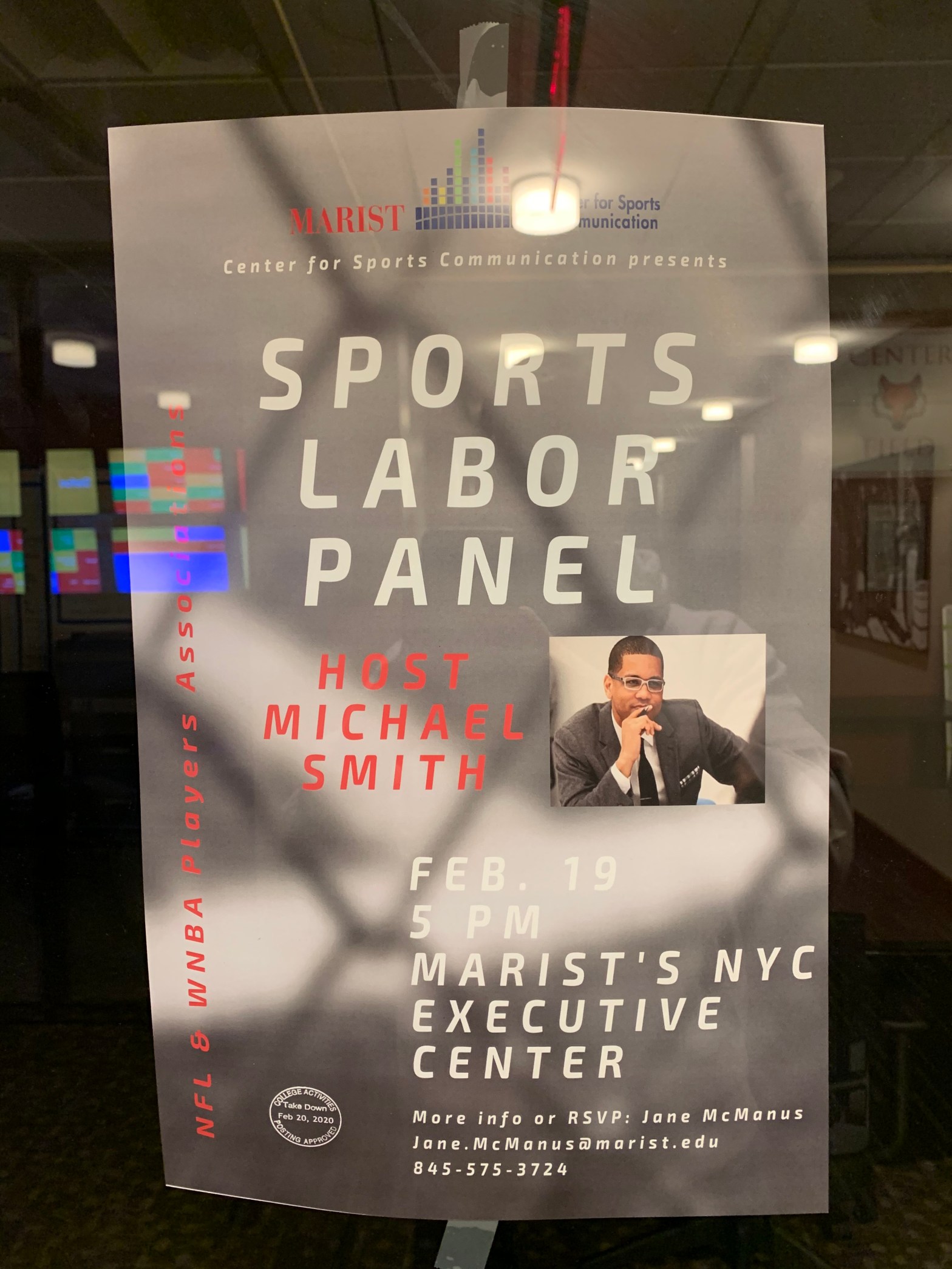
Tonight in Manhattan, at the New York City Executive Center, the Marist College Center for Sports Communication hosted a labor panel and discussed collective bargaining agreements in sports. The panel was hosted by Marist Professor Michael Smith, who is well-known for his days as host of popular ESPN shows such as “His and Hers” and “Numbers Never Lie.” Smith recently began teaching at Marist College this semester after fifteen years with the sports network. Marist Sports Communication students both studying in Manhattan and Poughkeepsie were in attendance, soaking in information and participating in a Q&A. 

To clarify, a collective bargaining agreement is an agreement between the players association of a given league and the league itself (owners, commissioner, general managers etc.). A collective bargaining agreement touches on everything from player safety to which substances should or shouldn’t be banned to what percentage of league revenue goes to the players. In simplest terms, it is a way for players to have a say in what happens in the league and lets them establish their rights. In a sport like the NFL that causes so many injuries, player rights are particularly important. If your career can end in an instant, it’s important that the NFL Players Association fights for players to be taken care of. If a CBA is not reached before a season starts there is a “lockout,” and no games are played. This has happened in almost every major sport at one time or another. 

The panel was hosted to inform Marist students who are looking to one day work in the sports world about the business relationship players have with leagues. With the NFL currently negotiating its next CBA and causing sports CBA’s to be in the news a lot recently, Marist decided it was a good time for a teaching moment. The Labor Panel was a great experience for many Sports Communications students. It offered interesting insight on a complicated subject from people that work hands on with the issue. 

“The Marist Labor Panel in NYC was a great opportunity to learn about an aspect of professional sports I am not often informed about,” said Marist junior Tyler Webb. “The struggle of athletes to secure benefits, whether it be financially-based or not, is a fascinating push-pull. I particularly was intrigued by the discussion of the WNBA’s new CBA, where benefits, such as higher player salaries, stood as major wins for the WNBA players. The generally pro-player CBA negotiated for the WNBA represents major progress for women in pro sports.”

Joining Michael Smith on the panel was a group of collective bargaining experts, Marist Director of Sports Communication Jane McManus and Marist Sports Communication Professor Leander Schaerlaeckens. Among those collective bargaining experts was Terri Jackson, who is the head of the WNBA Players association. Jackson, who is the mother of NBA player Jaren Jackson Jr., was key in the recent collective bargaining agreement the WNBA just completed and was quite instrumental in guiding the discussion. 

Jackson was joined by Nolan Harrison of the NFLPA and Molly Levinson who works as a player representative for the United States Women’s National Team. According Marist junior, Alex Azarm– who was in attendance– Nolan Harrison talked about how the NFL CBA’s main objective is to find a balance between every player, owner and alumni. Two hot button issues that are currently being discussed are if the NFL should expand to a seventeen game season (news that just broke tonight), and if that happens, NFL players could potentially get life-long benefits. 

Azarm said that Levinson talked about how the USWNT PA was just restarted in 2015, and how she is going to trial May 5th to fight for U.S women soccer players to be paid as much as the male players. 

When it came to the question and answer part of the evening, students clamored to ask the experts questions. Alex Azarm asked if league representatives try to take things from other leagues that they see works. Terri Jackson of the WNBA PA said that they often try to use things they see works in the NBA, but they think it’s important to maintain their own identity as a league. 

This Labor Panel was just one of the many impressive events that Marist College Center of Sports Communication have begun to host yearly. With the introduction of Jane McManus as the Dean, (who spent ten years at ESPN) the Sports Communication program at Marist has truly taken great strides forward. The combined experience possessed by all the Sports Communication professors at Marist College is very beneficial for its students, and continues to be an invaluable asset on nights like tonight.

Trouble in Cincinnati

After a subpar junior season at Louisiana State University, quarterback Joe Burrow came out of nowhere and took the College Football world by storm last season. Burrow broke the NCAA D1 single-season record for passing touchdowns and yards on his way to being named the nation’s best player and winning the Heisman Trophy. Burrow then topped it all off by leading LSU to a College Football Playoff Championship win, immortalizing himself in the history books forever. 

It has been widely believed that Joe Burrow is a sure fire lock to be drafted number one overall by the Cincinnati Bengals in this upcoming draft, and that he will be their franchise quarterback for many seasons to come. Joe Burrow– a kid born and raised in Ohio –would come home to Cincinnati, in perfect storybook fashion.

All seemed to be going smoothly.

Then this rumor that Joe Burrow might refuse to play for Cincinnati crept up, whispering of chaos and turmoil in the ears of a Bengals franchise that has seldom caught a break in their fifty-two year existence.

Cue the panic.

Sports media outlets are picking up this storyline and running with it. It’s hard to tell how legitimate it is– Burrow himself hasn’t made any direct comments on it– and it makes one wonder if it’s just a rumor that NFL pundits are forcing to have legs because football news is slow in late February. Regardless, as of today, people are committed to making this story a thing. 

So let’s indulge.

One article on this whole saga that I found to be particularly enjoyable was Danny Heifetz’s article for the Ringer titled, “Is Joe Burrow Already Trying to Break Up With the Bengals?” While almost every detail from this story stems from speculation, seeing all the things added up together, it’s hard not to agree that perhaps there’s truly something to this idea that Burrow wants nothing to do with Cincinnati. Heifetz neatly and succinctly lays out the following things as evidence for a potential Burrow-Bengals divorce:

  • Ex-Bengals quarterback Carson Palmer says the Bengals don’t care about winning a Super Bowl. 
  • A DAY later, Burrow hires Carson’s brother Jordan to be his pre-draft trainer. Jordan also played quarterback (as Carson’s backup) for the Bengals. Like his brother, Jordan’s not a huge fan of the franchise.
  • Burrow said in an interview, “If they select me, they select me.”
  • Steve Bartkowski, who also was once a number one overall pick, told Burrow that he should  “pull an Eli Manning.” Manning refused to play for the Chargers when they picked him.

Pair these things with the fact that Burrow has yet to give the media the traditional, “it’d be an honor if they picked me” spiel, and it makes this whole thing– at the very least– fishy. Burrow’s involvement with the Palmers is particularly curious. As Heifetz points out, “considering what Carson was willing to say in public, it’s easy to imagine the stories Burrow might have heard in private” (Heifetz, The Ringer). It’s a great point. Anyone who is going into a new job might reach out to someone who previously worked for the company to find out how they do things. Burrow reaching out to Palmer is no big deal, but Palmer basically screaming from the rooftops about the Bengal’s shortcomings, while also talking to Burrow in private, has to be making the Bengals sweat. 

It’s likely that even if Burrow comes out and says that he won’t play for the Bengals, they will still draft him. This could then create a cold war-esc situation between Burrow’s camp and the Bengals, as Bengal’s General Manager is notoriously proud, and likely won’t just roll over and just trade the LSU product. 

If it comes to that it will be quite interesting, but again who knows if this story is truly anything more than coincidences leading to speculation on slow news days. 

Only time will tell.

Brady Don’t You Do it

Welp, the day of reckoning for every New England sports fan might finally be upon us. As per Ian Rapport– via NFL Now– who talked directly with Patriots owner Robert Kraft, (I might have to lay down after that half-sentence) Patriots star quarterback, Tom Brady will hit the open market this off-season.

The level of royalty that Brady possesses in New England cannot be understanded, and he is arguably the most beloved athlete by his region in American sports right now, and maybe in sports history. Losing Brady to free agency would be unbearable, and it could very well set off some type of New England style purge. I’m talking Dunkin Donuts lit on fire, freedom trails destroyed, packy’s raided, the Ted Williams tunnel flooded, the de-funkying of Marky Mark’s bunch, clam chowder everywhere, barrels of tea thrown in the harbor (wait we already did that)… you get the idea. It will be ugly. 

All emotions aside, certain media talking heads think Brady leaving the Patriots is a real possibility and the city of Boston hasn’t been this alarmed since Paul Revere was giving them bad news in the middle of the night. Since Fox Sports Commentator Skip Bayless is among those aforementioned talking heads, I refrained from calling the group experts, but even Bayless’s incessant rants about Brady going to the Dallas Cowboys are unsettling for a Patriots fan. What’s worse, is Skip Bayless isn’t the only one saying the Cowboys make some sense as a landing spot for Brady. The reality is Dallas is one of many teams that could be a fit for Brady. 

Potential Landing Spots for Tom Brady

New England Patriots: While I obviously have bias, the Patriots still make the most sense for the six-time Super Bowl champion. Brady has spent his entire twenty year career (in which he experienced great success, I might add) with the Patriots, and at forty-two, starting from scratch with a new coach and system won’t be easy. The Patriots said they’d be willing to pay Brady $30 million a year for the next two years to bring him back, and in that Super Bowl Hulu ad he did say he wasn’t going anywhere (hard to say in what way he meant that, but hey, wishful thinking), so Brady staying put is still very likely.

Chicago Bears: The Bears current quarterback, Mitchell Trubisky, has just one year left in his contract, and more importantly: he’s not good. Brady allegedly wants to play on a team that has real weapons (the Patriots would have to figure that one out if he stays) and The Bears fit that bill. They have a youthful and strong running game with David Montgomery and Tarik Cohen, and Cohen– a quick receiving back– is the prototypical running back that Brady has made so successful in his career (think Kevin Faulk, Dion Lewis, James White and Shane Vereen). At wideout they have Allen Robinson, who is a big target and who has been very successful throughout his NFL tenure despite catching passes from only Blake Bortles and Trubisky thus far. Defensively, the Bears are extremely good, and are likely the best or second best Defense in the league (Patriots being the other). While they would need to clear some cap space, the Bears roster might be a great fit for Brady.

Indianapolis Colts: When quarterback Andrew Luck retired out of nowhere last season, the Colts were left in dire straits. Brady’s old backup, Jacoby Brissett, took over and did decent, but he is not the answer that the Colts are looking for. Brissett and Brian Hoyer– who is the other quarterback in Indianapolis, and who also used to be Brady’s backup– are both good friends with Brady and could be useful in recruiting him. The Colt’s weapons are not insane, but they are solid, as running back Marlon Mack, wide receiver TY Hilton and TE Jack Doyle could all do some serious damage with a good QB at the helm. The Colts O-Line is one of the best in the league thanks to All-Pro left guard Quentin Nelson, and their defense is young but led by line-backer Darius Leonard, it has strong potential. The Colts were Brady’s rival for years, and it might be tough to convince him to spend the next few years in Indiana, but they are still a possibility.  

Los Angeles Chargers: The Chargers just announced that they will be parting ways with verteran quarterback Phillip Rivers, meaning unlike some of these other teams, their quarterback job is vacant. The Chargers offer a few things: a) the chance for Brady to end his career playing in California, which is where he was born and b) a stable of weapons that Brady would love. At wideout, the Chargers have Keenan Allen and Mike Williams, both who are great targets. At running back, they have Melvin Gordon and Austin Ekhler, which would instantly become the best backfield Brady has ever played with. The problem is their O-Line and Defense are only decent, and they don’t have many fans. Perhaps Brady can change the culture, but it’s hard to envision Brady wanting to play in front of empty seats. 

Dallas Cowboys: Here’s the one that Skip Bayless, Colin Cowherd and the other talking heads can’t stop talking about. For the last four seasons, the Cowboys have had Dak Prescott at quarterback, who has done well, making the playoffs twice. At just twenty-six, and with his full potential maybe still on the horizon, it seems strange that people are talking about the Cowboys moving on from Prescott to Brady. However, Prescott is also a free agent and after declining the $30 million a year the ‘Boys offered him, he made it clear he wants a ton of money. Usually owner Jerry Jones is pretty quick to pull out his checkbook (maybe too quick) but Prescott is still unsigned. This means the Cowboys could be looking to go another direction, and that they can’t find middle ground with Prescott. Enter Brady. His asking price is lower, he’s a proven winner, and pairing this golden boy with America’s team might be everything Jerry Jones has ever wanted. They have the league’s best O-Line, great weapons and a strong defense. Maybe Brady is the piece they were missing all along.

Las Vegas Raiders: This one’s simple. They have money and a lot of it. They’d have to dump quarterback Derek Carr’s contract but that can be arranged. They lack weapons, but going to Vegas and making big bucks with Coach Jon Gruden isn’t the worst thing in the world. 

Tampa Bay Buccaneers: Head Coach Bruce Arians has made it seem like the Bucs won’t be resigning quarterback Jameis Winston, meaning the QB spot will be wide open. Arians is an offensive guru, and the team has two studs at wide receiver in Mike Evans and Chris Godwin, which could make this an attractive landing spot for Brady. That being said, Tampa Bay has a losing culture as of late, and it’s hard to see Brady going to a team that needs that much work. He wants to win now, and doesn’t have the time to help rebuild.

While I think Brady will be a Patriot next season, some of these other teams truly do make sense for him (I just puked a little in my mouth). Also, the whole “he should retire a Patriot,” narrative that many of the New England faithful are using is baseless, as many star quarterback’s have moved on from their original teams in the twilight of their careers. Peyton Manning didn’t end his career with Colts, Joe Montana didn’t retire a 49er and Brett Farve didn’t play his whole career with the Packers. It’s not like this would be unprecedented. Brady wasn’t happy this year with the weapons the Patriots had around him, there might be some weird tension with him and Coach Bill Belicheck, he had the worst year he’s had in a long time and I’m in a glass case of emotion. All Patriots fans can do now is just hope, and appreciate the times we had. 

But if he does come back?

Then Super Bowl back on.

Create your own website, free on WordPress.com.Create your own website.
Start free